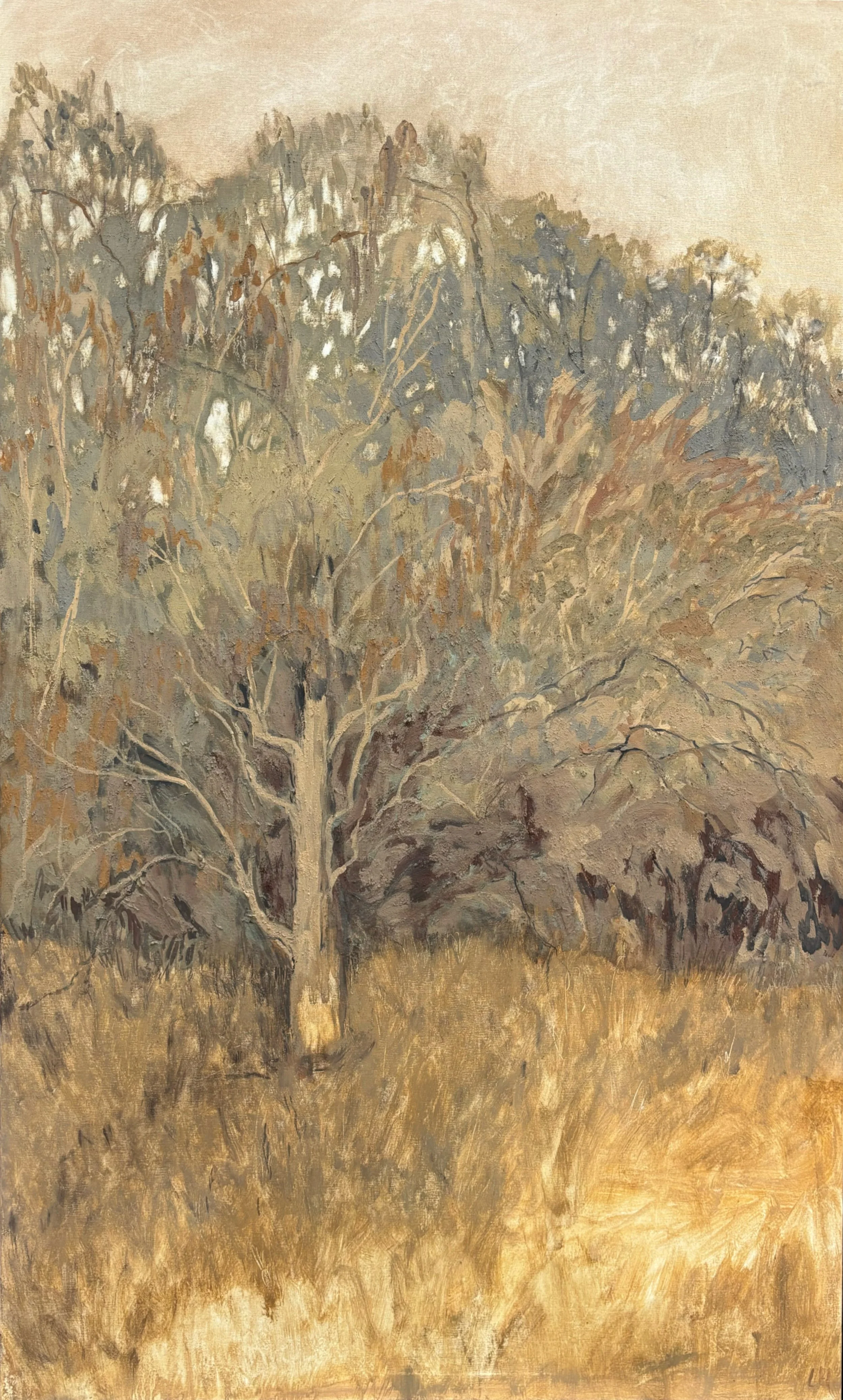
“Even Trees need a King”
155x90cm
ground earth, charcoal, copper verdigris and binder on canvas.
Titled after a parable from the book of Judges, where the trees are asking each other which of them should be the leader. At the end of our farm road is a copse of trees so tightly packed together that their branches seem to create an incredible, multi-species ‘bunch’ of foliage reaching heavenward. Reflecting the parable, the trees jostle, writhe, push and throw their gnarled fingers as high as they can, each in its own most fervent living attempt to be ‘king’ of the forest.
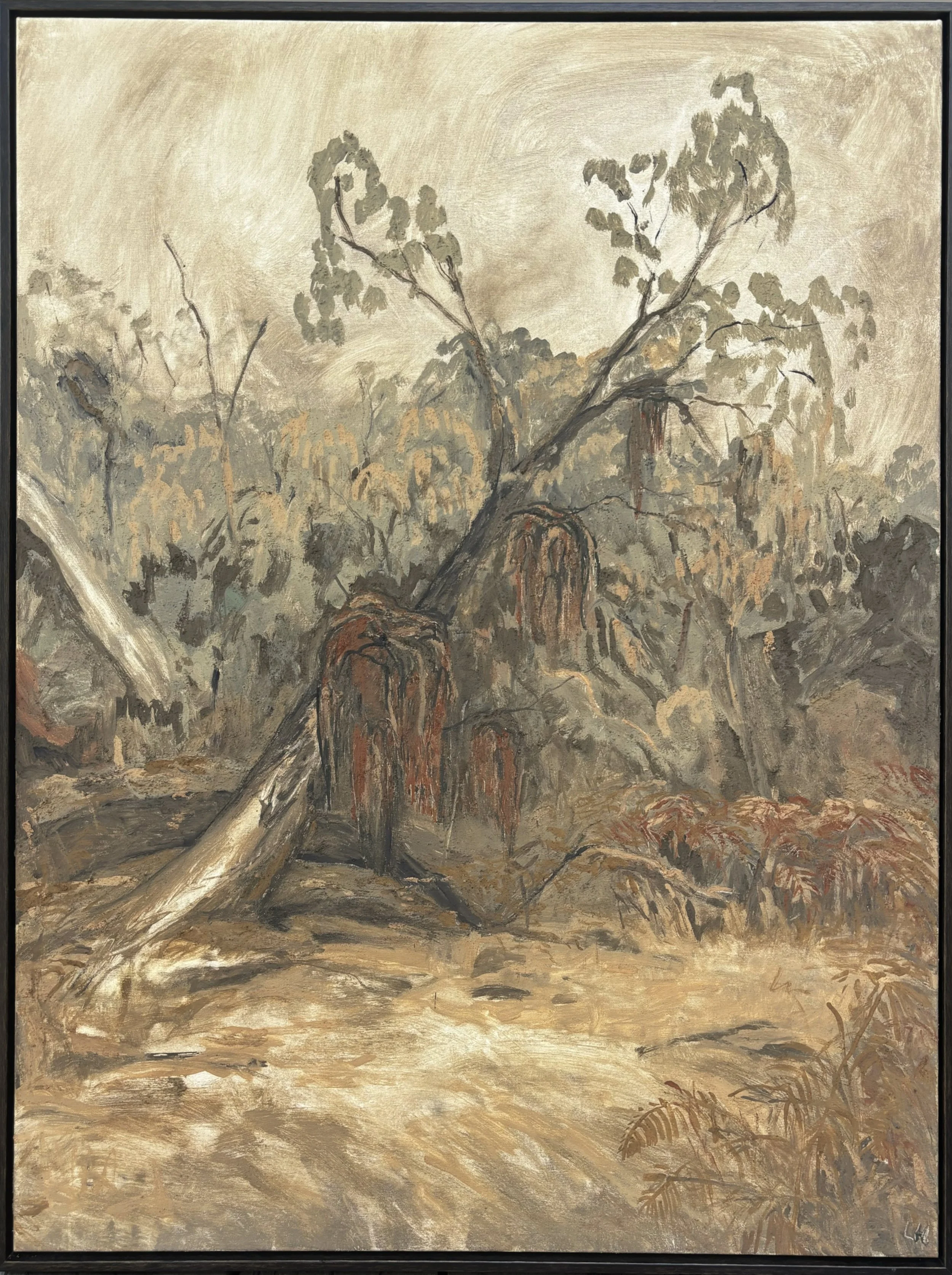
“The trees are wearing red flags”
Fleurieu Art Prize finalist
120x90cm
Ground earth, charcoal, copper verdigris and acrylic on canvas.
The native box mistletoe is normally considered a ‘hemi-parasite’ - attaching itself to eucalyptus and sequestering water and nutrients. Large trees can usually support several mistletoe, which provide food for birds and small marsupials. However, mistletoe infestations can kill trees when they are already weakened due to stress, drought or disease. In response to a changing climate, more frequent drought events and reduced soil health, box mistletoe are now killing large gum trees on a mass scale in south eastern parts of Australia - indicating a loss of resilience in these decades old trees, and signalling an alarming warning - the natural systems are breaking down.
This misteltoe laden eucalypt is at our farm, and I have made this painting using earth pigments collected from the property. The painting tells the story of our changing landscape both in composition, and in materiality - as I observe the effects of climate change in real time living on the land as a farmer and an artist.
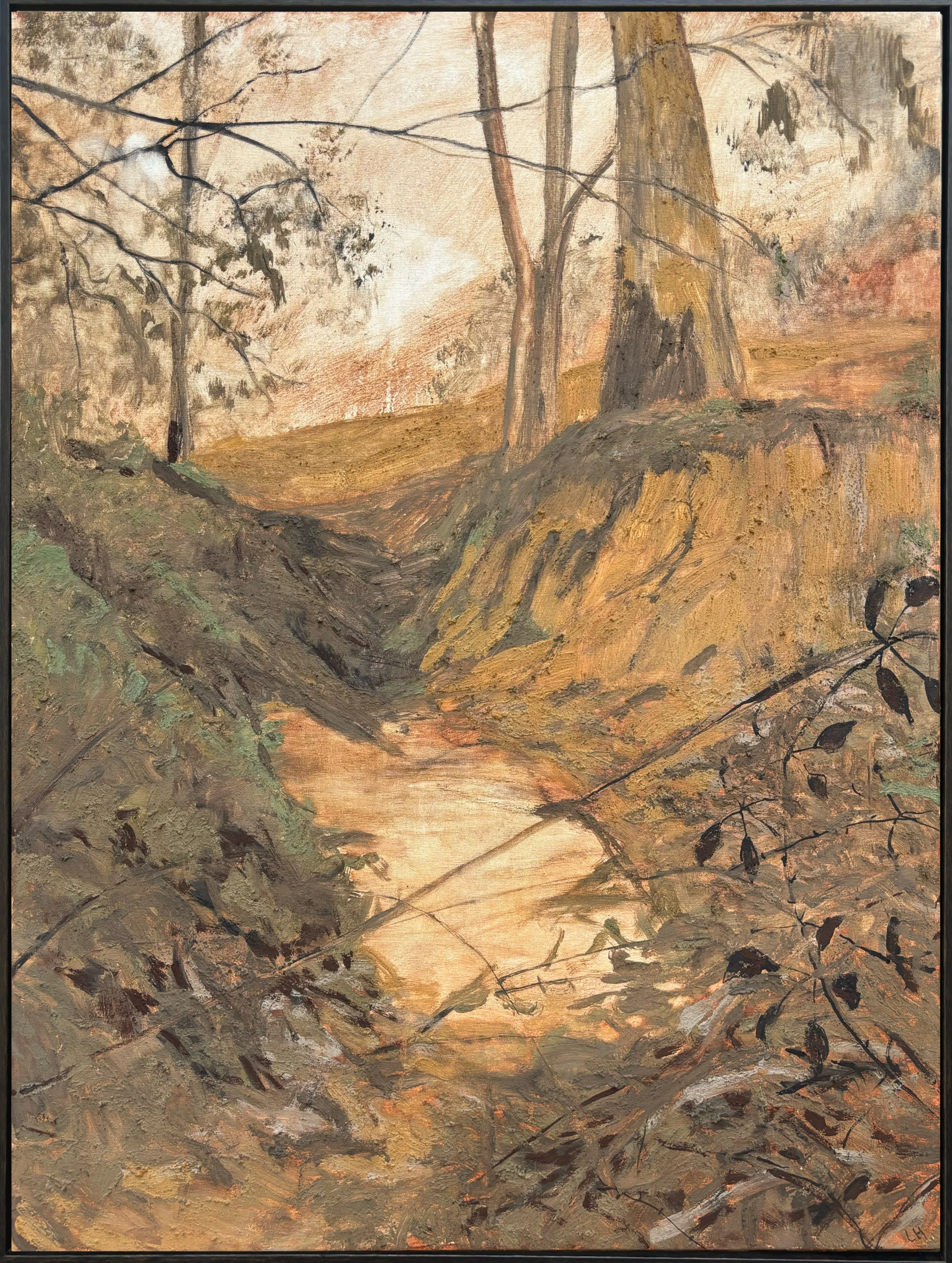
“They tried to stitch the landscape back together”
100x80cm
Ground earth, charcoal, copper verdigris and binders on canvas.
The first settlers to Gippsland aggressively cleared the landscape for agriculture - believing it to be highly fertile due to the extraordinary size of the Strzelecki gums they discovered growing there. Unfortunately, they found the denuded landscape poorly supported their European crops, and was now prone to erosion. Naïve to the seasonal control that the European winters offer; killing off canes and keeping plant spread in check - they planted blackberry along riverbanks in an attempt to stabilise them - unfortunately causing incredible infestation that is ongoing today.
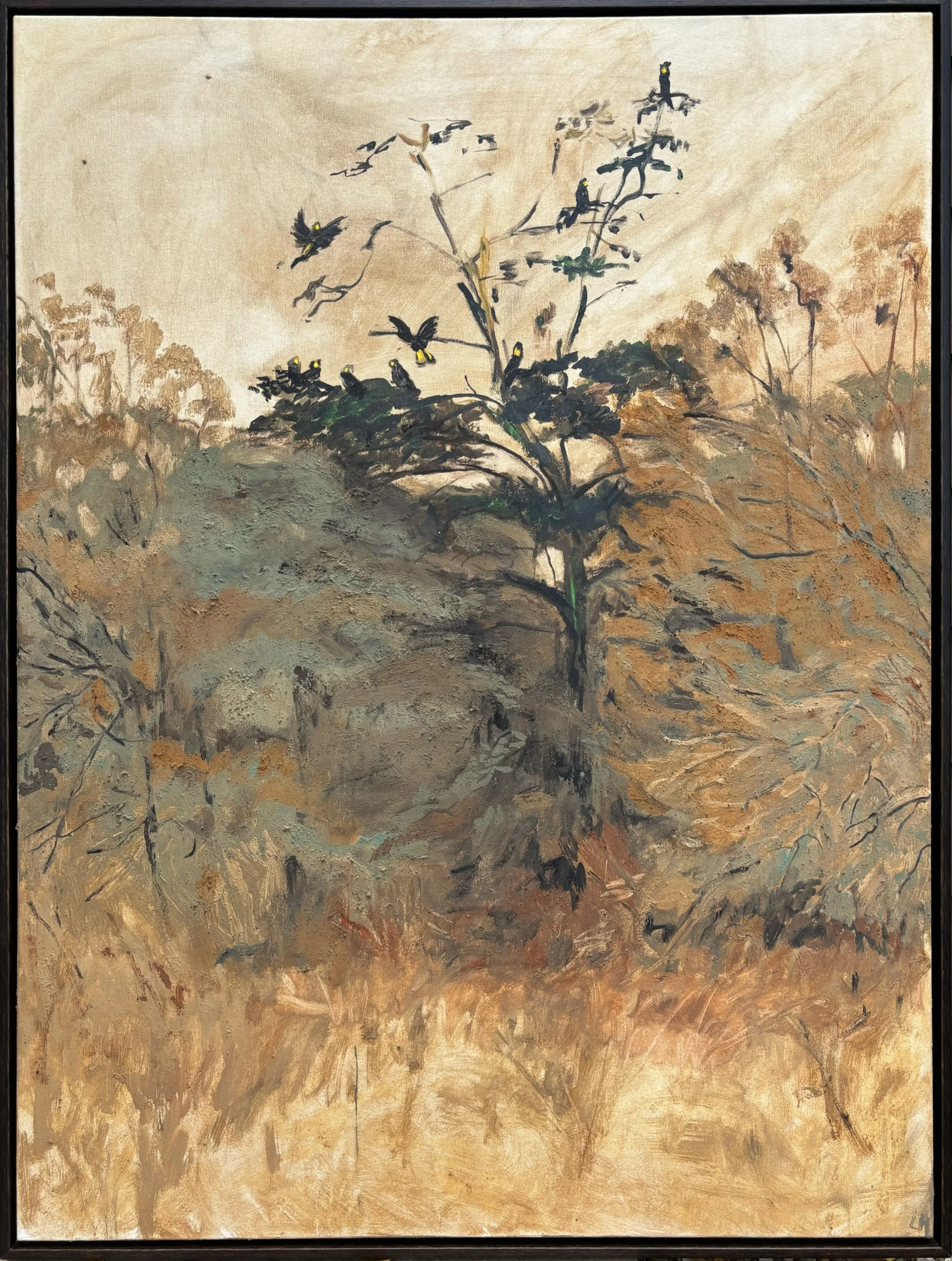
“A friend for my friend cannot be a foe”
120x90cm
ground earth, charcoal, copper verdigris and acrylic on canvas.
Radiata pine is a significant environmental weed in most of Australia where it escapes plantations and enters the natural forest - altering the soil chemistry and competing with native plants for sunlight. However in some areas, the naturalisation and persistence of pine, and its readily available food source has supported the survival of large flocks of endangered yellow tail black cockatoos, who nest in the trees and feed on pine cones. This dependence complicates weed management strategies, and goes to show that a changed landscape is changed forever - and rarely can be “put back”, as all living things are interconnected and change together, and what affects one species undoubtedly affects another.
In this painting materiality has been used to designate the environmental status of plants, with native bush painted in natural pigments sourced from the local landscape, and the introduced pine painted in synthetic polymer (acrylic) paint.
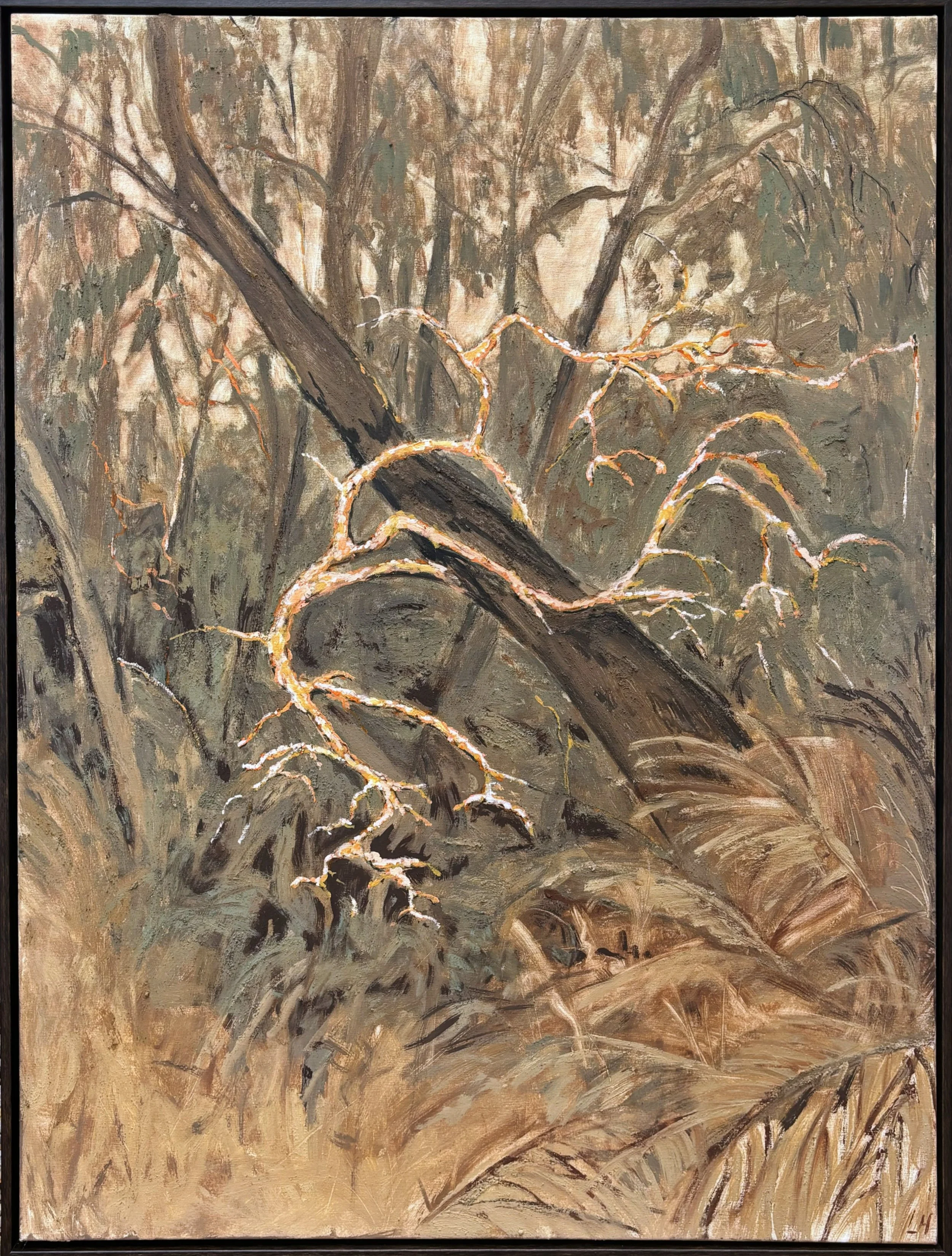
“Naturalised, Xanthoria parietina (sunburst maritime lichen)”
120x90cm
ground earth, charcoal, copper verdigris and acrylic on canvas.
As well as many well known introduced weed species- sunburst maritime lichen arrived aboard colonial timbers in the 1800s. The spread of agriculture around the world can be traced by studying the taxonomy of Xanthoria parietina which is now naturalised in Australia, and often celebrated for its beauty, growing readily on rocks, trees and piers around Tasmania and Victoria, with many failing to realise it is non-native.
In this painting materiality has been used to designate the environmental status of plants, with native bush painted in natural pigments sourced from the local landscape, and the introduced lichen painted in synthetic polymer (acrylic) paint.
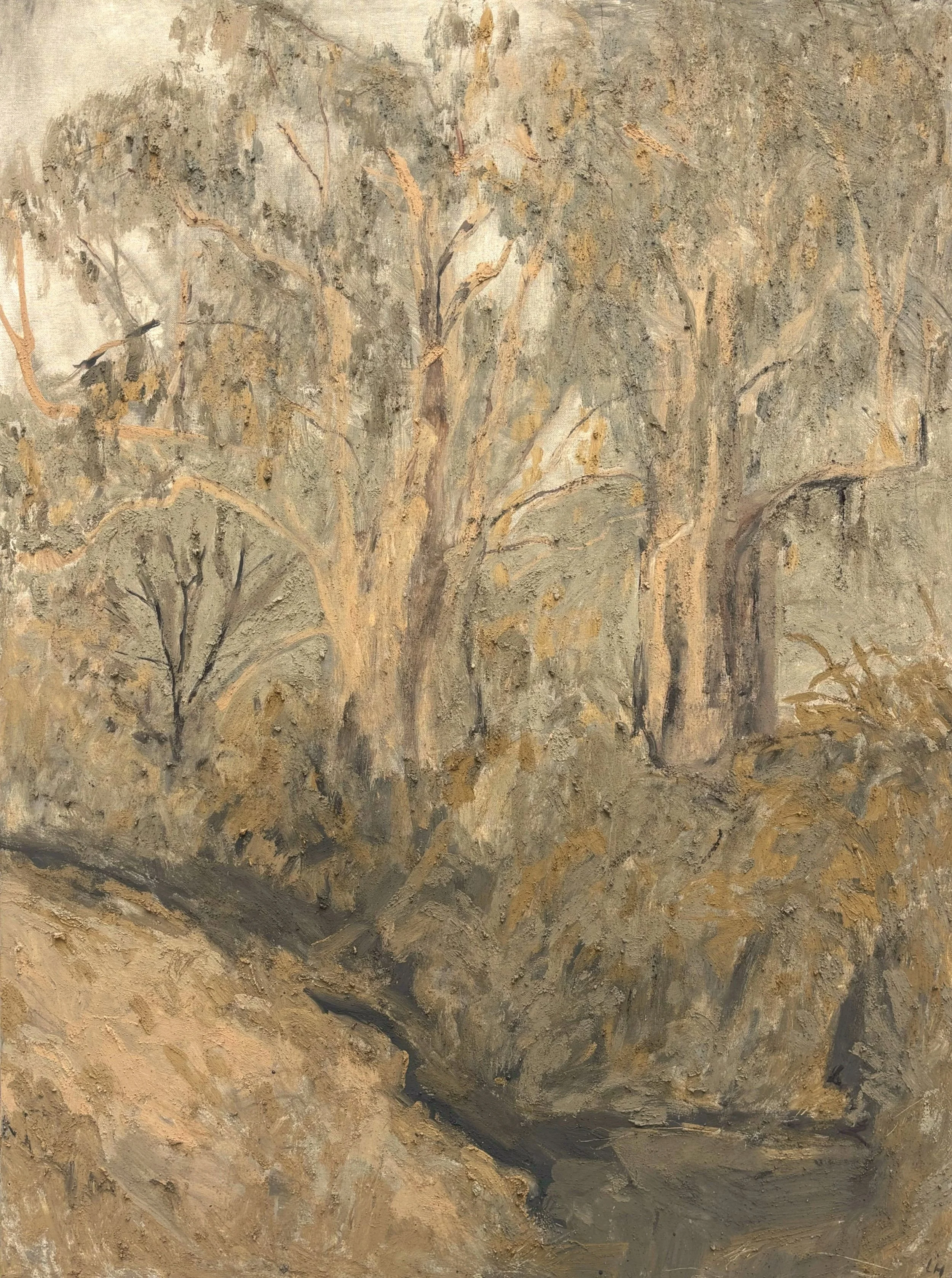
“The Creek Is Dry en plein air”
120x90cm
ground earth, charcoal and binder on canvas.
I painted this en plein air in January, tucked into the creekbed at our farm. It was dry, stiflingly hot and the cicadas were roaring as I chose pigmented rocks to grind, and painted the towering gums above.